




- By spotlers.com
- 07.05.2026
- No Comments
Marketing is undergoing one of its most significant transformations in decades. Where brands once competed for audience attention through creativity and budget alone, today the key advantage lies in the ability to work with data, personalize communication, and rapidly adapt to customer behavior. This is precisely where artificial intelligence has become an essential tool for modern marketers.
AI is no longer seen as an experimental technology. It is now used for marketing automation, customer behavior prediction, content creation, personalized email campaigns, and ad optimization. Companies actively adopting AI gain a competitive edge through faster decision-making and more precise audience engagement.
Why AI Has Become Critical for Marketing
The average user encounters thousands of advertising messages every day. In this environment of information overload, one-size-fits-all campaigns are becoming increasingly ineffective. Customers expect brands to understand their interests, preferences, and the context of each interaction.
AI addresses this challenge by processing large volumes of data in real time. Algorithms analyze user behavior, purchase history, website activity, email engagement, and social media interactions. Based on this data, systems automatically generate personalized offers and communication scenarios.
According to digital marketing research from 2025–2026, hyper-personalization has become one of the primary drivers of conversion growth and customer retention. Users increasingly gravitate toward brands that deliver relevant content and an individualized experience.
AI also significantly improves the efficiency of marketing processes. Many tasks that once took hours or even days — audience segmentation, ad copy generation, creative testing, and campaign analysis — are now performed automatically.
Key Applications of AI in Marketing
Personalizing the Customer Experience
Personalization is one of AI’s greatest strengths in marketing. Modern AI platforms can analyze user behavior and adapt communication in near real time. AI can recommend products based on previous purchases, dynamically change website content for individual users, send emails at optimal times, offer personalized discounts and promotions, and tailor ad messages to specific audience interests.
Companies are increasingly leveraging predictive analytics to forecast customer actions and assess purchase likelihood — allowing marketers to anticipate future user behavior rather than simply reacting to current needs.
Marketing Automation
AI is redefining the approach to marketing automation. Where automation was once limited to simple trigger-based sequences, AI can now independently manage entire customer journeys. Modern automation systems can launch personalized scenarios, score leads, optimize ad campaigns, test message variations, and automatically segment audiences.
AI is especially prominent in email marketing, where platforms analyze open rates, click-through rates, engagement, and interaction history to automatically adapt newsletter content. For businesses, this means less manual work and the ability to scale marketing without expanding the team.
Generative AI and Content Marketing
Generative AI has been one of the most visible trends in recent years. Tools like ChatGPT and other large language models help marketers create written content, ads, scripts, images, and even video. AI is actively used for writing articles and posts, generating email campaigns, producing SEO content, developing ad creatives, writing product descriptions, and adapting content for different audience segments.
That said, the human role remains critical. AI can accelerate content production, but without strategic oversight from a marketer, the output often becomes formulaic and generic. Many experts consider the defining trend of 2026 to be not just AI adoption, but the combination of automation with human expertise.
AI and Data Analytics
Marketing is becoming increasingly data-driven. Companies collect enormous volumes of customer information, but without AI, using that data effectively is nearly impossible. AI helps uncover hidden patterns, forecast customer behavior, analyze channel performance, optimize budgets, and identify high-potential audience segments.
AI also plays a vital role in omnichannel marketing, helping consolidate data from email, CRM, websites, ads, and social media into a unified system for a more accurate understanding of the customer journey.
Challenges Facing Marketers
Despite its advantages, AI adoption comes with a set of real challenges.
Data Privacy. As personalization advances, scrutiny over user data protection intensifies. Companies must comply with GDPR and other privacy regulations while ensuring transparency in how AI is used.
Risk of Generic Content. The widespread use of generative AI is producing large volumes of similar-sounding content. It becomes especially important for brands to preserve a distinctive tone of voice and a human touch.
The Need for Oversight. AI remains a tool, not a replacement for the marketer. Without human supervision, algorithms can make errors, generate irrelevant messaging, or amplify data biases.
What Lies Ahead for Marketing
In the coming years, AI will become an integral part of virtually every marketing process. The industry is already moving toward agentic marketing — systems capable of independently managing specific tasks and workflows.
Other trends set to intensify include hyper-personalization, real-time marketing, AI-powered analytics, automated customer journey management, and deeper integration of AI into CRM and CDP platforms.
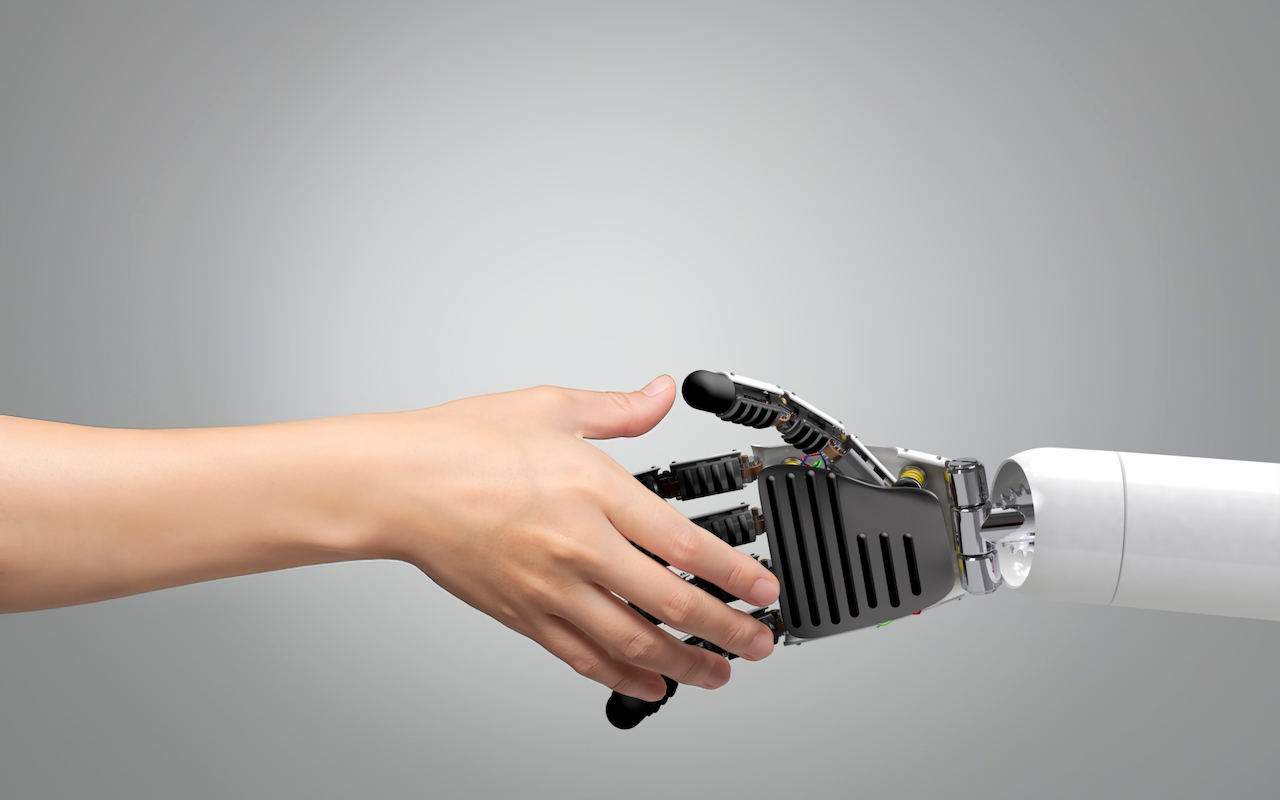
Ultimately, the main competitive advantage won’t simply be using AI — it will be a company’s ability to skillfully combine technology, data, and human expertise.
Conclusion
Artificial intelligence is already reshaping marketing across personalization, analytics, automation, and content creation. Companies that adopt AI tools today gain the ability to adapt more quickly to market shifts, understand their audiences more deeply, and build more effective communications.
But successful AI-driven marketing is not just about technology. People — their needs, emotions, and brand experiences — remain at the center. The future of marketing belongs to companies that can unite the capabilities of AI with creativity, strategic thinking, and the trust of their audience.